
Root Canal Care in St. Cloud: We Find the Problem, a Trusted Specialist Treats It
Friesz Family and Cosmetic Dentistry does not perform root canals in our office. Instead, Dr. Jason Friesz examines your tooth, confirms whether you need a root canal, and refers you to a trusted root canal specialist in the St. Cloud area. After treatment, we help you plan the next step to protect your tooth for the long term.
Welcome to Friesz Family and Cosmetic Dentistry, located at 2506 1st St S in St. Cloud, MN. Dr. Jason Friesz, DDS, earned his dental degree from the University of Minnesota and is a member of the American Dental Association and the Minnesota Dental Association. As a one-dentist practice, we know our patients by name, and we believe that includes being honest about who is best for each kind of care.
When a tooth needs a root canal, we believe a specialist is the right person to treat it. Call us at (320) 253-1370 or request an appointment if your tooth pain won’t go away.
Why Do We Refer Root Canals to a Specialist?
Maybe a tooth has ached for days. Maybe it twinges every time you sip something hot, or it hurts to bite down on that side. You want answers, and you want to know the person working on your tooth does this every day.
That’s exactly why we refer. A root canal specialist, called an endodontist, is a dentist who has completed extra years of training focused only on the inside of the tooth. They do root canal treatment all day, every day. They use specialized equipment built for the tiny, curved canals inside a tooth’s roots.
Our role is just as important. We’re the team that knows your mouth, your history, and your goals. We identify the problem, explain it clearly, refer you to the right specialist, and stay involved after treatment.
Patients sometimes worry that a referral means their problem is unusually serious. It doesn’t. It simply means you’re getting care from someone who focuses on this one thing, while your home dental team stays right beside you.
What Is a Root Canal, and When Do You Need One?
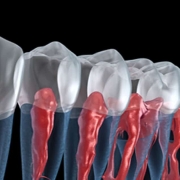
Every tooth has three main layers. The hard outer enamel protects the tooth. Under it is dentin, a softer layer. At the center is the pulp, a soft core that holds the tooth’s nerve and blood supply. The pulp runs from the top of the tooth down through thin channels in the roots. Those channels are the “root canals.”
When deep decay, a crack, an old injury, or repeated dental work lets bacteria reach the pulp, it can become inflamed or infected. The tooth can’t heal that tissue on its own. During a root canal, the specialist numbs the tooth, removes the damaged pulp, cleans and shapes the canals, and fills and seals them. The tooth stays in your mouth, and the source of pain is gone.
The American Association of Endodontists notes that modern root canal treatment is often no more uncomfortable than getting a filling. Most of the pain people link to root canals actually comes from the infection, not the treatment.
Signs you may need a root canal:
- A toothache that lasts or keeps coming back
- Pain when you bite or chew on one tooth
- Sensitivity to hot or cold that lingers after the food or drink is gone
- Swelling or tenderness in the gums near one tooth
- A small bump on the gums near a sore tooth
- A tooth that has turned darker after an injury
If you notice any of these, call us. Only an exam can tell what’s really going on.
Your Options When a Tooth Is Badly Damaged
When the pulp is infected, you have a few options. Dr. Friesz will walk you through each one so you can make an informed choice.
| Option | Who provides it | Keeps your natural tooth? | What to expect next |
|---|---|---|---|
| Root canal treatment | A root canal specialist (endodontist), by referral | Yes | Most teeth then need a filling or crown to protect them |
| Tooth extraction | Friesz Family and Cosmetic Dentistry, or a local oral surgeon for difficult teeth | No | The gap is usually filled with a bridge or denture to keep nearby teeth from shifting |
| Watch and wait | Not recommended once the pulp is infected | Not for long | An infected tooth won’t heal on its own, and the infection can spread |
| Medication alone | Can calm swelling for a short time | Does not fix the problem | Pain often returns because the infected tissue is still inside the tooth |
In most cases, saving your natural tooth is the best long-term choice. Nothing works quite like your own tooth for chewing, speaking, and keeping your bite in balance.
How a Root Canal Referral Works, Step by Step
- Exam and X-rays at our office. Dr. Friesz examines the tooth, checks your bite, and takes X-rays to see the roots and surrounding bone.
- A clear explanation. He tells you what he found in plain language, including whether a root canal is the right choice and what your other options are.
- Referral to a trusted specialist. We refer you to a root canal specialist in the St. Cloud area and share your X-rays and notes so you don’t have to start from scratch.
- Your root canal treatment. The specialist numbs the tooth and completes the treatment, usually in one or two visits.
- Back home to us. After treatment, you return to Friesz Family and Cosmetic Dentistry so Dr. Friesz can check how the tooth is healing.
- Protecting the tooth. Many treated teeth, especially back teeth, need a crown to keep them strong. Others only need a filling. Dr. Friesz will recommend the right option.
- Ongoing care. Regular cleanings and exams help your treated tooth last for many years.
Is a Root Canal Worth It? Understanding Cost and Value
It’s natural to think about cost when you hear “root canal.” We can’t give exact prices here, because every tooth and every insurance plan is different. We can tell you how timing affects the bigger picture.
Treating an infected tooth early usually costs less than waiting. An infection left alone can spread, damage the surrounding bone, and create a more complicated situation. Sometimes, by the time a patient comes in, the tooth can no longer be saved.
Saving a tooth avoids the cost of replacing it. When you pull a tooth, you usually need to fill the gap with a bridge or a denture so your other teeth don’t drift and your bite stays even. Those are good options, but they come with their own costs and time.
Pain costs you, too. A toothache can steal sleep, make eating hard, and pull you away from work and family. Getting it treated sooner gets you back to normal faster.
Our office accepts cash, checks, Visa, Mastercard, and CareCredit financing, and our team files most insurance claims for you. The specialist’s office will review the root canal costs and payment. If you have questions about coverage, call us, and we’ll help you understand where to start. Learn more on our financing page.
Serving St. Cloud and Nearby Communities
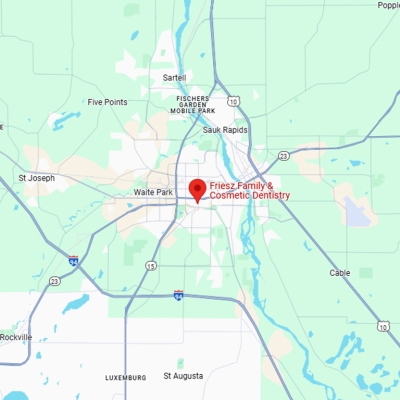
Friesz Family and Cosmetic Dentistry is located at 2506 1st St S in St. Cloud, just a short drive for patients in Sartell, Sauk Rapids, Waite Park, and St. Joseph. Our office is open Monday through Thursday, 7:30 a.m. to 4:00 p.m. If a toothache starts over the weekend, call first thing Monday morning so we can see you as soon as possible.
Serving the St. Cloud Region: St. Cloud | Sartell | Sauk Rapids | Waite Park | 56301 | 56303 | 56377 | 56379 | 56387
Common Questions About Root Canals
Does Friesz Family and Cosmetic Dentistry offer root canal treatment?
No, our office does not perform root canals. Dr. Friesz examines the tooth, confirms whether you need a root canal, and refers you to a trusted root canal specialist in the St. Cloud area. After treatment, you return to us for follow-up care and, if needed, a filling or crown to protect the tooth.
What’s the difference between a dentist and an endodontist?
A general dentist, like Dr. Friesz, cares for your whole mouth: cleanings, exams, fillings, crowns, dentures, and more. An endodontist is a dentist with additional years of training focused only on the inside of the tooth. Root canal treatment is their specialty, so we refer these cases to them.
Does a root canal hurt?
For most people, a root canal feels similar to getting a filling. The specialist numbs the tooth first, so you should feel pressure but not sharp pain. The American Association of Endodontists notes that treatment aims to relieve infection-related pain. Some tenderness for a few days afterward is normal.
Will I need a crown after a root canal?
Many teeth need a crown after a root canal, especially back teeth that do heavy chewing. A crown covers and protects the treated tooth so it doesn’t crack. Front teeth sometimes only need a filling. Dr. Friesz will check the tooth after your treatment and recommend the best option.
Tooth Pain? Let’s Find Out What’s Going On
You don’t have to figure this out on your own. If a tooth is aching, sensitive, or just doesn’t feel right, Dr. Friesz and our team will find the cause, explain your options, and connect you with the right care. Request an appointment online or call (320) 253-1370, Monday through Thursday.